
Vertical farming has been gaining momentum across East Tennessee, with Knoxville emerging as an unexpected hub of experimentation. While the region has long been associated with traditional agriculture, a growing number of small-scale hydroponic and indoor farms are working to redefine how the city grows leafy greens. But as the images shared above show, even a crop that appears vibrant at first glance can reveal deeper challenges when examined closely.
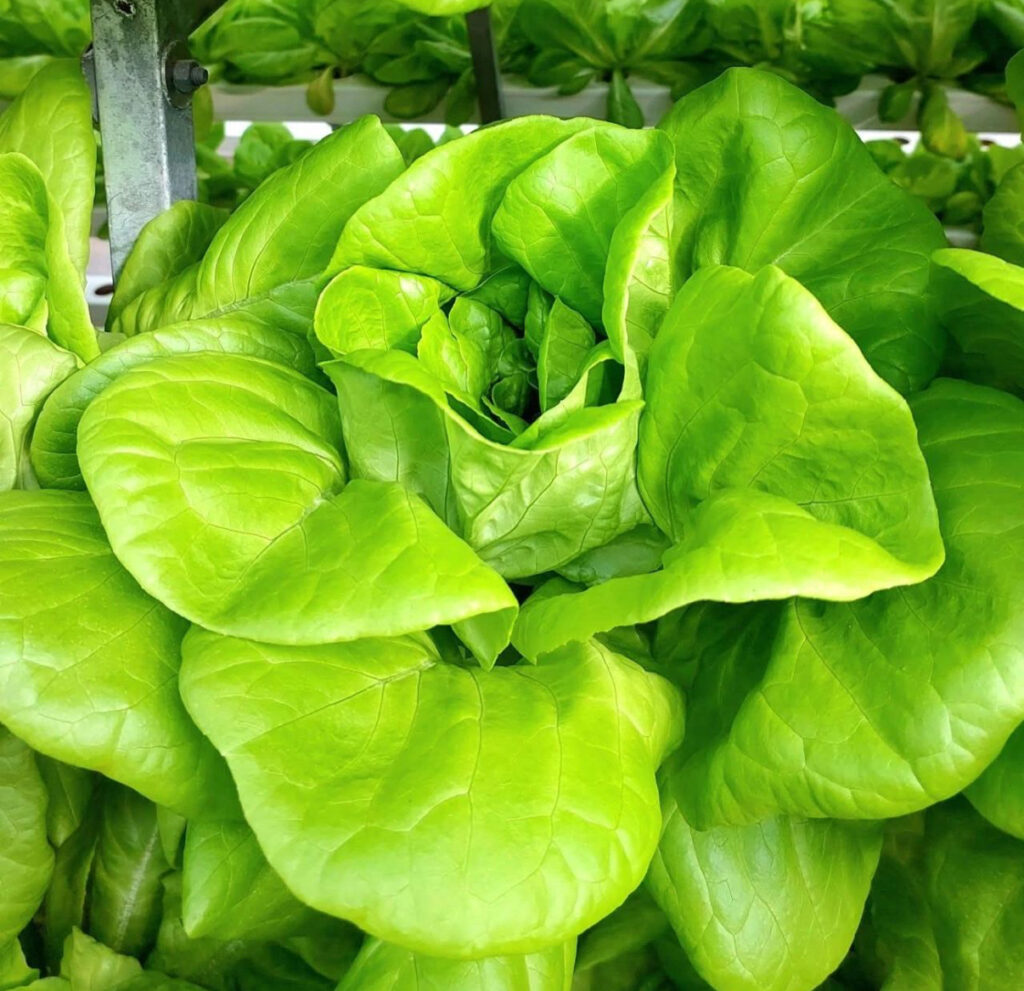
In the photo, a head of hydroponically grown lettuce displays bright, well-shaped leaves and a full canopy. Yet, as one grower’s testimony highlights, there are subtle indicators of stress—slight leaf-edge defects, pale coloring, and uneven chlorophyll development. These clues reveal the delicate balancing act behind controlled-environment agriculture.
A local grower and consultant offered this detailed firsthand assessment:
“So at first glance, this head of lettuce looks beautiful. When you enlarge the image you see defects on the edges of the upper leaf on the right, and in general the color of the leaves is too light and could be greener. Two important things determine the quality of the plant: the irrigation interface and the lighting interface. From my experience as a grower and as a consultant to hydroponic farms, the problem with the head of lettuce in the picture usually stems from an E.C. level that is too low, and the intensity of the light and the type of light, both of which directly affect the duration of the growth cycle and extend it in order to reach the target weight.”
Electrical conductivity (E.C.)—the measure of nutrient concentration in hydroponic systems—plays a pivotal role in producing dense, flavorful leaves. When E.C. drops too low, plants become pale, grow slowly, and struggle to reach commercial weight targets. Many Knoxville growers aim for an E.C. range between 1.2–1.8 mS/cm for butterhead lettuces, depending on variety and stage of growth.
Lighting is the second major variable. East Tennessee’s rapidly expanding indoor-ag community often relies on LED arrays, but small differences in spectrum, intensity, or photoperiod can dramatically change leaf texture and coloration. Insufficient intensity leads to wide, thin leaves—exactly the characteristic visible in the shared image. Too much blue light produces stunted growth; too much red causes stretching.
Knoxville’s urban agriculture advocates say these seemingly minor issues highlight a larger truth: indoor farming requires a scientific mindset, meticulous monitoring, and constant recalibration. Unlike outdoor crops that benefit from natural light and soil buffering, hydroponic plants depend entirely on human-engineered environments.
This technical complexity has not slowed local interest. In fact, Knoxville’s food-system challenges—especially food deserts in East Knoxville and Lonsdale—are motivating new hydroponic ventures, educational programs, and home systems. Local organizations estimate that the Knoxville metro area imports over 90% of its leafy greens, and shelf life is significantly shorter by the time these crops reach grocery stores. Vertical farms offer a pathway to locally grown greens with significantly fewer food-miles.
The lettuce shown in the image is a reminder that while controlled-environment agriculture offers precision and predictability, it demands expertise. But it also demonstrates how even small farmers can produce commercial-grade harvests with the right support.
In Knoxville, innovation in hydroponics continues to grow—often one grow-light and one nutrient tank at a time. And as growers share insights, troubleshoot problems, and exchange real-world experiences like the testimony above, the region is steadily building a community capable of reshaping how fresh food is grown and accessed in East Tennessee.
Vertical farming has been gaining momentum across East Tennessee, with Knoxville emerging as an unexpected hub of experimentation. While the region has long been associated with traditional agriculture, a growing number of small-scale hydroponic and indoor farms are working to redefine how the city grows leafy greens. But as the images shared above show, even a crop that appears vibrant at first glance can reveal deeper challenges when examined closely.In the photo, a head of hydroponically grown lettuce displays bright, well-shaped leaves and a full canopy. Yet, as one grower’s testimony highlights, there are subtle indicators of stress—slight leaf-edge defects, pale coloring, and uneven chlorophyll development. These clues reveal the delicate balancing act behind controlled-environment agriculture.A local grower and consultant offered this detailed firsthand assessment:
“So at first glance, this head of lettuce looks beautiful. When you enlarge the image you see defects on the edges of the upper leaf on the right, and in general the color of the leaves is too light and could be greener. Two important things determine the quality of the plant: the irrigation interface and the lighting interface. From my experience as a grower and as a consultant to hydroponic farms, the problem with the head of lettuce in the picture usually stems from an E.C. level that is too low, and the intensity of the light and the type of light, both of which directly affect the duration of the growth cycle and extend it in order to reach the target weight.”
Electrical conductivity (E.C.)—the measure of nutrient concentration in hydroponic systems—plays a pivotal role in producing dense, flavorful leaves. When E.C. drops too low, plants become pale, grow slowly, and struggle to reach commercial weight targets. Many Knoxville growers aim for an E.C. range between 1.2–1.8 mS/cm for butterhead lettuces, depending on variety and stage of growth.Lighting is the second major variable. East Tennessee’s rapidly expanding indoor-ag community often relies on LED arrays, but small differences in spectrum, intensity, or photoperiod can dramatically change leaf texture and coloration. Insufficient intensity leads to wide, thin leaves—exactly the characteristic visible in the shared image. Too much blue light produces stunted growth; too much red causes stretching.Knoxville’s urban agriculture advocates say these seemingly minor issues highlight a larger truth: indoor farming requires a scientific mindset, meticulous monitoring, and constant recalibration. Unlike outdoor crops that benefit from natural light and soil buffering, hydroponic plants depend entirely on human-engineered environments.This technical complexity has not slowed local interest. In fact, Knoxville’s food-system challenges—especially food deserts in East Knoxville and Lonsdale—are motivating new hydroponic ventures, educational programs, and home systems. Local organizations estimate that the Knoxville metro area imports over 90% of its leafy greens, and shelf life is significantly shorter by the time these crops reach grocery stores. Vertical farms offer a pathway to locally grown greens with significantly fewer food-miles.The lettuce shown in the image is a reminder that while controlled-environment agriculture offers precision and predictability, it demands expertise. But it also demonstrates how even small farmers can produce commercial-grade harvests with the right support.In Knoxville, innovation in hydroponics continues to grow—often one grow-light and one nutrient tank at a time. And as growers share insights, troubleshoot problems, and exchange real-world experiences like the testimony above, the region is steadily building a community capable of reshaping how fresh food is grown and accessed in East Tennessee.