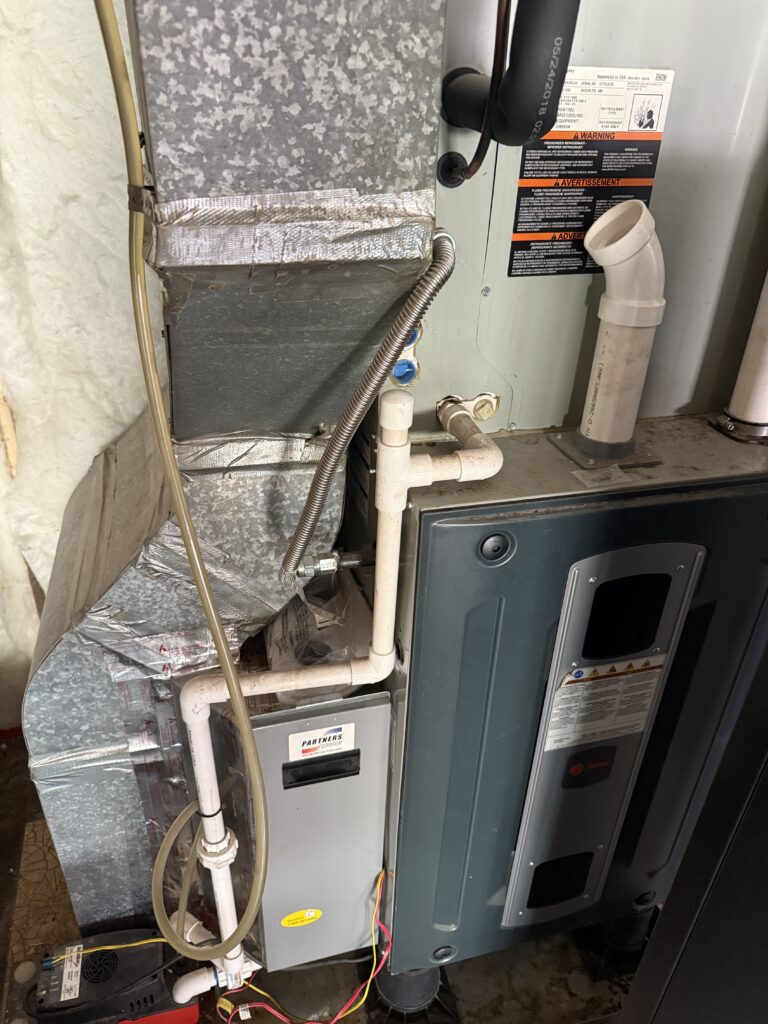

If your car breaks down, you have options. You can buy any part you want online, watch a video, and get your hands dirty. In many states, like Tennessee, there’s no annual check to stop you. It’s your car, and your “right to repair” is largely intact.
Now, why isn’t it the same for your air conditioner?
If you’ve ever tried, you know the answer: the HVAC industry is a fortress. You can’t just buy the most important material—refrigerant—unless you’re EPA-608 certified. It’s a threshold that simply doesn’t exist for your car. This legal barrier is just the beginning of a story that’s getting far more complicated.
The Weird World of HVAC Law
That EPA-608 certificate is the key to a world of stringent, and sometimes baffling, regulations. While I’ve been studying for it, I’ve learned just how different this industry is.
For example, large commercial systems with 50 pounds or more of refrigerant are allowed to leak 20% to 30% of their gas every year before the EPA complains. A system with 50 pounds could leak 15 pounds annually, no questions asked.
To put that in perspective, your entire residential system probably holds 6 pounds. For us homeowners, the rule is much tighter—a leak rate over 10% a year is the trigger.
The rules don’t stop at refrigerant. When you buy a car, you can get it from anyone, in any condition, and start driving. When you buy an HVAC system, it almost certainly has to meet a minimum efficiency (SEER 14.3), it cannot use phased-out gases, and you must hire a registered technician to install it.
This wall of regulations is about to be complicated by a massive “growing pain” that will affect every homeowner: the technology itself.
The Technician Gap: From “Follow-the-Line” to Quantum Mechanics
You might have heard people complain about their cars becoming too complex to fix. In HVAC, that problem is about to get ten times worse.
Old-school, conventional air conditioners are fantastically simple. To be a technician, you needed to understand one basic concept: the phase change of refrigerant from gas to liquid and back. After that, you just needed to understand contactors and thermostats. If you could complete a “follow-the-line” doodle as a kid, you could solve almost any problem with a conventional AC.
Those days are over.
Modern air conditioners are not just mechanical; they are high-tech, proportional systems.
-
Nothing is just “on/off.”
-
Compressors and fans run at variable speeds.1
-
Valves open just enough.
-
The thermostat isn’t an on/off switch; it’s a communicating hub that tells the system exactly how far it is from the target temperature.
These systems run on complex code to make all components work in harmony.2 Suddenly, the simple “follow-the-line” mechanic needs to be an expert in gasses, electronics, sensors, programming, and even PID control parameter tuning.
The Coming Crisis: “Grifters” and DIY
I believe many old-school HVAC technicians will simply deny the need for all this complexity. But the pressure for energy efficiency won’t stop. This creates a dangerous “technician gap,” and a crisis for homeowners.
I see two futures, and neither is great.
-
The “Grifter” Problem: A new generation of installers, pretending to know everything, will charge exorbitant prices. They’ll sell you a $15,000 system (sponsored by their supplier) that still isn’t fully proportional, and they’ll lock you into a warranty that requires regular service from… you guessed it.
-
The DIY Backlash: Customers, fed up with $15K quotes, will start ordering $2,000 pre-filled, “DIY” HVAC systems online. They’ll try to install them without the training, certification, or support, leading to a host of new problems.
The innovation we need in HVAC isn’t just in the technology—it’s in the training. If we can’t create a new generation of technicians who can bridge the gap from simple mechanics to complex electronics, the only people who will win are the “grifters,” and every homeowner will pay the price.