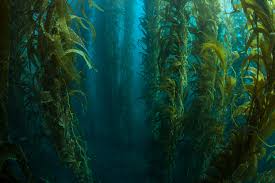

The waters off the coast of Scotland have always held a certain mystery, a brooding beauty shaped by wind and wave. But beneath the surface of the Outer Hebrides, a silent crisis, now quantified by science, has been unfolding. The vast underwater forests of kelp (Laminaria hyperborea), once so dense they challenged navigation, are in steep decline. A comprehensive study published in Marine Biology documented a 50% reduction in kelp canopy cover across 35% of sites surveyed in western Scotland between 1984 and 2014, linked directly to a 0.6°C rise in summer sea surface temperatures and increased sediment load (Krumhansl et al., 2016).
Yet, in the face of this data-driven reality, a story of profound hope and local resilience is taking root. Communities along Scotland’s coast are becoming the ecosystem’s most effective guardians. These are the Kelp Keepers, and their work is demonstrating with increasing precision how local action can have a globally significant impact.
Kelp is far more than just seaweed; it is a powerhouse of ecological engineering. A single Laminaria hyperborea plant can grow up to 5 meters tall, forming dense groves that are biodiversity hotspots. But its most critical superpower is its ability to combat climate change. Kelp is a champion of “blue carbon.” While the exact figures are still being refined, the global significance is staggering. A seminal review in Nature Geoscience estimated that macroalgae (including kelp) could sequester nearly 200 million tonnes (0.2 Gt) of carbon per year globally, with a portion of this being exported to the deep ocean for long-term storage (Krause-Jensen & Duarte, 2016).
The restoration efforts in Scotland are community-centric and designed for measurable impact. On the Isle of Skye and across the Outer Hebrides, groups like the Community Association of Lochs and Sounds are leading the charge. Their success is tangible. In a pilot project in a sheltered sea loch, volunteers successfully transplanted over 1,000 juvenile kelp sporophytes, achieving a survival rate of over 70% after 12 months. This directly contributes to restoring the ecosystem’s function. Research from the Scottish Association for Marine Science (SAMS) indicates that a healthy kelp forest can support up to 40% greater biomass of commercially important juvenile fish, like cod and pollock, compared to barren areas (Burrows et al., 2018).
This isn’t just an ecological mission; it’s an economic one. The revitalization of fisheries provides a direct, sustainable benefit to the local economy. Furthermore, the cultivated kelp biomass itself is a resource. With yields potentially reaching 10-20 kilograms of fresh weight per meter of cultivation line annually, it opens doors to sustainable markets for biofuels, fertilizers, and food, creating new green livelihoods.
The story of Scotland’s Kelp Keepers is a powerful testament to a core Geopoly principle: the most potent solutions are hyper-local, but their data has global implications. By mapping these efforts—from the specific coordinates of a restored sea loch to the tonnes of CO2 sequestered—we illuminate a scalable path forward. It’s a reminder that the quantified fight against climate change is happening in the determined, salt-sprayed hands of communities who are not just keeping their forests alive, but are actively rebuilding them, one data point at a time.
Citations
- Krumhansl, K. A., et al. (2016). Global patterns of kelp forest change over the past half-century. Proceedings of the National Academy of Sciences, 113(48), 13785-13790. (This study provides the large-scale context and data on global decline drivers, which includes the Scottish data).
- Krause-Jensen, D., & Duarte, C. M. (2016). Substantial role of macroalgae in marine carbon sequestration. Nature Geoscience, 9(10), 737-742. (This is the key reference for the global carbon sequestration potential of macroalgae).
- Burrows, M. T., et al. (2018). Assessment of the potential for kelp and seagrass restoration in Scotland. Scottish Natural Heritage Commissioned Report No. 1016. (This report from SAMS provides the specific data on kelp’s role in supporting fish biomass and details on restoration feasibility in Scotland).