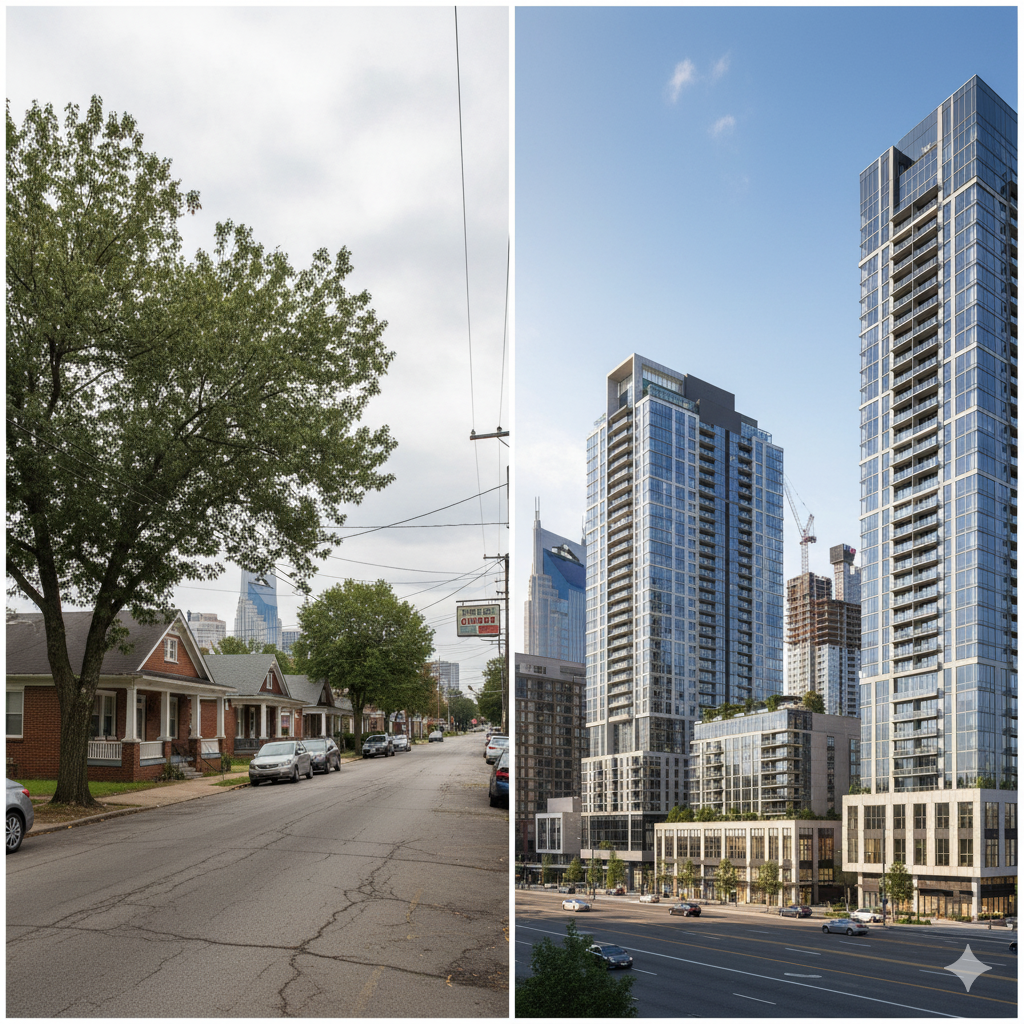

The New Southern Squeeze: How Rising Rents Are Pushing Communities to the Breaking Point
In cities across the South—especially in rapidly growing metros like Nashville, Knoxville, and Chattanooga—housing affordability has reached a tipping point. What was once a regional advantage, lower-than-average living costs, has now become a source of economic anxiety for families, young professionals, and long-time residents.
The crisis is most visible in the rental market. According to the latest data from the Tennessee Housing Development Agency, average rents in major Tennessee cities have climbed 27–40% since 2020, dramatically outpacing both local wage growth and inflation-adjusted income. In areas near downtown Nashville, rents have jumped by as much as 70% during the same period, driven by investor-owned developments and rising demand from out-of-state movers.
These spikes affect more than young renters—they ripple into the entire local economy. Families who once spent 25–30% of their income on housing now frequently spend 40–55%, leaving little room for savings, healthcare, transportation, or unexpected emergencies. Teachers, hospitality workers, retail employees, and even early-career nurses are being priced out of neighborhoods they have lived in for decades.
Local housing advocates warn that the affordability crisis creates not just financial strain but deep cultural consequences. When stable residents are pushed away, neighborhood identity weakens, local civic participation drops, and new developments often fail to foster community cohesion.
Developers argue that rising construction costs, land scarcity, and regulatory hurdles contribute to high rents. But residents counter that speculative investment, luxury-focused construction, and insufficient affordable housing policy have turned housing into a commodity rather than a community resource.
City governments across Tennessee are exploring solutions—density bonuses, zoning updates, mixed-income incentives, and public-private collaborations. But progress remains uneven and slow.
The reality is simple: The housing market of 2025 is no longer working for everyday Tennesseans. And unless affordability becomes a political priority, the Southern cities that once drew people for opportunity and comfort may soon find themselves losing the very communities that built them.