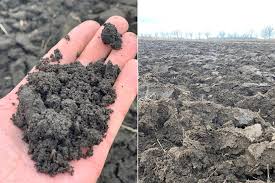

Ukraine has long been celebrated as one of the most fertile regions on Earth. Its vast black soils — known locally as chernozem — helped the country become a global agricultural powerhouse, feeding hundreds of millions of people with wheat, sunflower oil, corn, and other staple crops. But as war continues to dominate headlines, a quieter, slower emergency is unfolding beneath the surface: an accelerating Ukraine soil crisis that threatens not only Ukraine’s agricultural future but global food securit as well.
A Slow-Burning Crisis Decades in the Making
New research examining Ukraine’s nutrient management over the past 40 years reveals a dramatic and troubling shift. During the Soviet period, farmland was heavily over-fertilized with nitrogen, phosphorus, and potassium. Though this boosted short-term yields, excess fertilizer polluted rivers, groundwater, and surrounding ecosystems.
After Ukraine gained independence in 1991, the model collapsed. Fertilizer imports dropped sharply. Livestock numbers fell, drastically reducing manure availability. Supply chains weakened. As a result, farmers added far fewer nutrients to the soil than their crops removed.
By 2021, Ukraine’s soils were already showing:
- 40–50% phosphorus deficits
- 25% potassium deficits
- Nearly 9% loss of organic matter since independence
This erosion of fertility made Ukraine’s agricultural productivity more vulnerable just as global reliance on its exports grew.
War Has Deepened Nutrient Losses
Russia’s invasion in 2022 disrupted fertilizer supply chains, destroyed storage facilities, and pushed prices to historic highs. Many farmers scaled back fertilizer use during the 2022–2023 seasons, knowing their crops might be destroyed, stolen, or trapped in blockaded ports.
New nationwide soil data from 2023 shows severe nutrient extraction:
- Crops absorbed 30% more nitrogen than was replenished
- Crops removed 80% more phosphorus than farmers applied
- Potassium loss reached 70% above replacement levels
One overlooked factor is manure waste. Although livestock numbers have fallen, 90% of the manure still produced in Ukraine is discarded, representing an estimated US$2.2 billion in lost fertilizer value annually.
If these trends continue, Ukraine’s famed black soils could experience long-term degradation that persists far beyond the war.
Expert Insight From Algaeo: Microbes Matter
Because Ukraine’s soil crisis mirrors challenges seen worldwide, I reached out to Algaeo’s founder, whose work focuses on microbial soil health and regenerative fertilizer techniques (www.algaeo.com). He explained:
“Ukraine’s soil story is much like many others across the globe. While chemical inputs are not always bad, they are over-utilized and harm the natural ecology within the soil. This leads to reduced solubilization of chemicals within the soil and ultimately leads to reduced yield. Getting the microbial and chemical balance right is key to good soil. Our work at Algaeo aims to improve this.”
His insight underscores a larger point: restoring soil health requires more than adding fertilizer. It requires restoring the biological systems that make nutrients available to plants.
A Roadmap for Recovery
Researchers emphasize several actionable strategies that Ukraine can begin implementing even during wartime:
- Precision fertilization — applying nutrients only where and when crops need them
- Better manure management — collecting, storing, and redistributing manure across regions
- Enhanced-efficiency fertilizers — products that release nutrients slowly and reduce runoff
- Legume-based crop rotations — peas, soybeans, and other legumes naturally add nitrogen and improve soil structure
Some of these solutions require infrastructure investment. Others depend on training, coordination, and policy support. Ukraine’s post-war recovery funds, supported by the World Bank, may play a crucial role.
A Warning for the World
The Ukraine soil crisis is not just a regional issue — it is a global cautionary tale. Over-fertilization, under-fertilization, and mismanagement of nutrients threaten agricultural productivity in many countries. As climate pressures intensify, healthy soils will be one of humanity’s most valuable resources.
Saving Ukraine’s soil is about more than rebuilding a nation. It’s about preserving one of the world’s most important food-producing landscapes — and learning the lessons necessary to create a more resilient agricultural future everywhere.